

Hi again! It's been a while, I do apologise. Well, you may be happy I haven't posted — who knows? But I'm assuming you're intending on reading this if you've opened my blog again… or you're stalking me. Either way, welcome back!
This blog is a pretty important one to me, so I’m going to dive straight into it, It’s going to be a little more personal, and I want it to be honest about something that, for a long time, I couldn’t be honest about with myself.
How bad did it have to get?
September 2024. I had officially moved into my first university house, ready to start another year of studying psychology. Except, at the time, I wasn’t particularly motivated by my degree. My attention had shifted elsewhere, and that something was running.I would wake up at 6am, get straight out of bed and head out the door before I’d even had a second to think. Breakfast? No. I wasn’t fuelling myself beforehand, but after a while, my body seemed to adapt to running without it. I laid my running clothes out the night before so that, when I woke up, I had no excuse to stay in bed. At the time, I genuinely loved it. I loved knowing that I’d done my run and still had the rest of the day to do “normal” things. It gave me a sense of achievement before the day had even begun. Looking back, though, I think this was one of the first rules anorexia created for me.
I have to run before I start my day.
It sounds harmless enough, doesn't it? Plenty of people enjoy an early morning run. The difference was that, somewhere along the way, something I wanted to do became something I HAD to do. I didn’t realise how much control it had over me until illness forced me to take time off. I became so depressed and upset that it genuinely felt as though my world was ending. I couldn't understand why I felt so awful when all I was doing was taking a break from exercise. I didn’t realise that I wasn’t simply missing running. I was losing the thing I had started to rely on to feel okay.
And, before I knew it, another rule appeared.
Food.

The Rules kept coming
I don’t want to trigger anyone reading this, so I won’t go into specifics. But let’s just say that everything needed to be weighed, calories were searched for until the numbers became automatic in my brain, and my food became extremely bland. Initially, I wanted to eat “clean”. I became frightened of processed foods because I convinced myself they would slow me down, make me gain weight and stop me becoming the athlete I wanted to be. Running and performance became the justification for everything. I told myself that losing weight would make me faster. The girls I trained with seemed much smaller than me, and I started to feel that, if I wanted to belong in that sporting environment, I needed to look like them.
There were also conversations and rumours about periods. I began to believe that being an athlete meant you shouldn't have one. So, when mine became increasingly inconsistent as I lost weight, part of me saw that as confirmation that I was doing something right. I wanted abs. I wanted to fit the athlete ideal. I wanted to look the part, perform the part and feel as though I belonged.
Then came the mirror photos.
I would take pictures of myself to monitor my “progress”, saving them privately so I could compare how I looked over time. I became obsessed with noticing changes in my body, and, as strange as it sounds now, I felt proud when I thought I could see a difference. I have always valued my appearance, and if I’m honest, part of me still struggles with that. I wanted to look a certain way because I believed it would make me a better athlete. More than that, I think I wanted to feel as though I fitted in. I thought I was working towards becoming the best version of myself. I didn't realise I was becoming someone I barely recognised.

I thought I was fine
Here is the part that I think is so frightening about eating disorders. I was doing all of these things and genuinely believed I was completely fine. I had blood tests that came back fine, despite having lost a significant amount of weight and losing my periods. I was running faster, too, which only reinforced the belief that what I was doing was working. In my head, the evidence was there. I was getting faster. I was smaller. I was sticking to my rules. Surely that meant I was doing something right? Meanwhile, my degree had become an afterthought. My appearance, my performance and what I was going to eat consumed so much of my attention that there was very little room left for anything else. I would spend hours watching food videos. I watched people eat, including videos of people eating large amounts of food, because somehow, I thought it might put me off eating myself. At the time, I didn't question any of this. It had become part of my routine, and my routine had become my life. I wasn't okay. I just didn't recognise how unwell I had become. And because I didn't recognise it, I didn't think I deserved help.
I remember seeing posters on toilet doors about eating disorders and seeking support. I would think about it occasionally but quickly dismiss the idea. I didn't feel ill enough. That sentence is something I wish I could go back and challenge, because I think it kept me trapped for far longer than I realised. No one around me really spoke about what was happening, other than my boyfriend. I think people can become frightened of saying the wrong thing when it comes to eating disorders, and I understand that. But when nobody says anything, it can become much easier to convince yourself that everything must be okay. I took the silence as reassurance. Looking back, I was anything but fine.
The part nobody puts on Instagram
Now, let's get into the really nasty part. The part people don't tend to post about on social media because it isn't pretty. It isn't inspirational. And it certainly doesn't fit the narrative that an eating disorder is simply about wanting to be skinny.
My periods disappeared. My friendships suffered. My social life became practically non-existent. My energy was gone, my mood was awful, and I felt emotionally numb. I also experienced changes to my body that I had never expected, including increased body hair. But one of the hardest things to admit is how much my eating disorder affected my relationship. I struggled to feel present with my boyfriend. I forced my laughs, couldn't cry when I needed to, and felt disconnected from the person I had been before all of this started. My boyfriend became my carer. I don't say that to make him feel sorry for me, or to suggest that he ever made me feel like a burden. I say it because that is genuinely what happened. He was watching someone he loved become increasingly unwell, and he was trying to hold things together while I was losing the ability to do so myself. Our phone calls would revolve around anorexia because I didn't have the headspace for much else. It was as though I was in a relationship with both my boyfriend and my eating disorder. And my eating disorder came everywhere with me. I cancelled social events because I didn't know what food to choose, because the options made me anxious, or because I didn't want to make things awkward for other people. Sometimes, I simply didn't have the energy to socialise. I became increasingly isolated, and the more isolated I became, the more space my eating disorder had to take over.
Yet, despite everything I was losing, I was still proud.
I was proud when the number on the scales went down. Proud when I thought I looked smaller. Proud when my running times improved. Proud when my portions became smaller. How can someone be so unhappy and so proud of themselves at the same time? That is one of the hardest things to explain about anorexia. You can be watching your life fall apart while simultaneously believing that you're succeeding. I was losing my health, my relationships, my personality and my ability to enjoy the things I once loved. But the eating disorder kept telling me I was getting better because I was becoming smaller and faster. And I listened.
It's a fucking boring personality to have now that I can look back on it, but at the time, it was my identity. Running and anorexia had become so intertwined that I struggled to see where one ended and the other began. I think, underneath all of it, I had lost my sense of self. Cycling had always been a huge part of who I was. But I had started to lose my love for it, and running quickly filled that space. Restriction became another way to feel in control, another distraction from feelings I didn't know how to manage. I had found something that gave me a sense of purpose, but that purpose was slowly destroying me.
And the worst part? I thought I needed it.
When control becomes a prison
Because I was eating so little, I experienced a lot of anxiety. I started using running and restriction to cope with it, which, when I look back, seems so contradictory.
Surely eating properly and allowing myself to rest would have helped? But that wasn't how it felt at the time.
Eating made me anxious. Resting made me anxious. Not following my rules made me anxious. So I became even more attached to the very behaviours that were keeping me unwell. If I didn't run, I felt overwhelmed by anxiety and depression. If I did run, I felt a temporary sense of relief. Then the food thoughts would return, and I would become consumed by them all over again. It was exhausting. I think people who haven't experienced an eating disorder, or supported someone through one, can struggle to understand that it isn't simply about wanting to shrink your body. For me, it became about control, performance, identity and trying to cope with emotions I didn't know what to do with. It was about feeling as though I had to earn my place in the world. And that need for control began to affect every part of my life, even the place I called home. I became anxious around everyone in the house. My bedroom was right next to the living room and kitchen, which made things difficult when I was already so uncomfortable around food and other people. I started eating in my room because it meant I didn't have to interact with anyone. I want to make this clear: I loved my housemates. They hadn't done anything wrong. I was simply so deep in my eating disorder that being around people felt overwhelming. I constantly wanted to escape. I began to feel judged by everyone, but, looking back, I think a lot of that judgement was coming from me. I thought my portions were too big. I thought I was too fat. I thought I wasn't running fast enough. And when I couldn't quieten those thoughts, restricting felt easier.
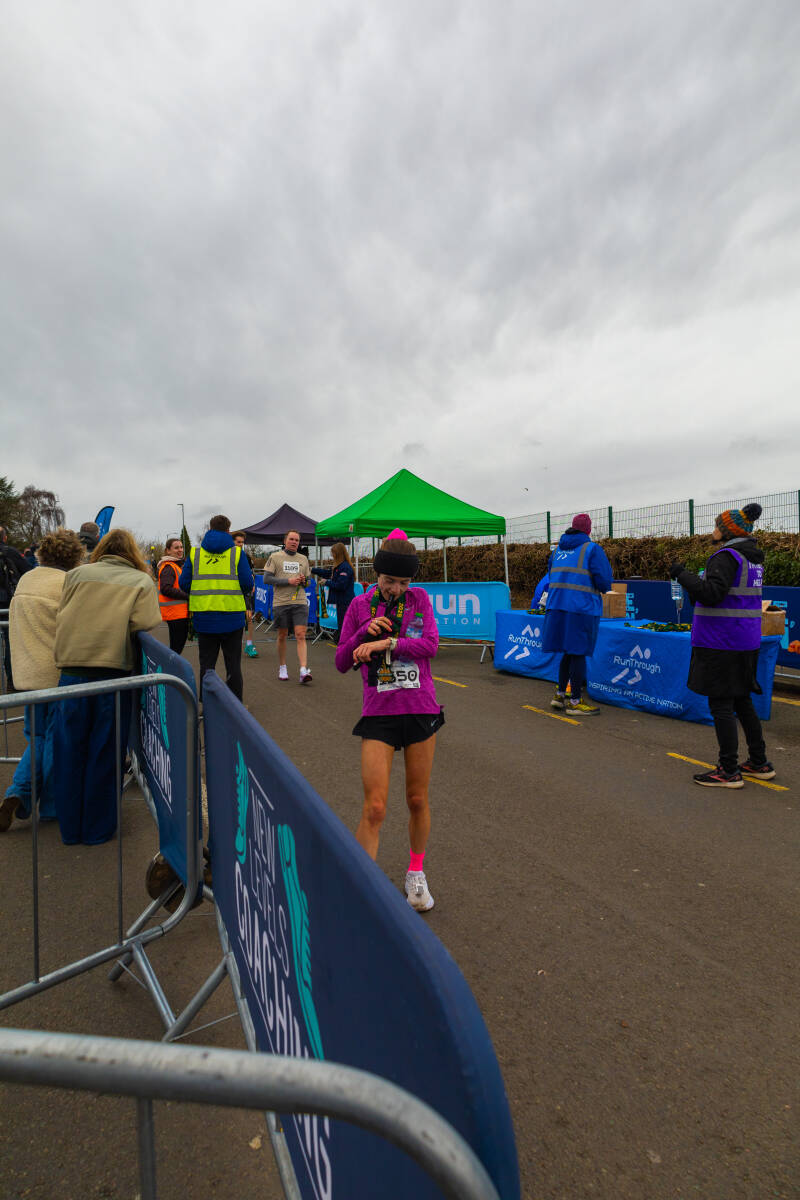
In February 2025, I completed a half marathon. It was incredibly hilly, and I finished in 1 hour, 40 minutes and 19 seconds — a huge personal best. At the time, I was proud. Of course I was. I'd achieved something I had worked towards, and the eating disorder immediately used it as evidence that everything I was doing must be right. But I can see now that a faster time didn't mean I was healthier. It didn't mean I was coping. And it certainly didn't mean my body was okay. My performance was improving in one area while so much of the rest of my life was deteriorating. Not long after that, things started to go seriously downhill.
How bad did it have to get?
think this is what I most want people to understand.
From the outside, some of my behaviours might have seemed obviously concerning. But from the inside, they were my routine. They were my rules. They were things I genuinely believed I needed to do. I didn't wake up one morning and decide to develop an eating disorder. It happened gradually, through habits and beliefs that became increasingly rigid, until I could barely imagine living any other way. And because I didn't recognise how unwell I was, I kept going.
Around March 2025, I attended an appointment with student services because I was struggling with an assignment. I thought I simply couldn't wrap my head around it and needed some extra help planning my work. Instead, I was told that I should probably study at home because they were concerned about my wellbeing. They were worried that I might collapse on my way to lectures. I remember breaking down in tears. I became hysterical because I was in absolute denial. I think, somewhere beneath that denial, I was also relieved. Finally, someone other than my boyfriend had noticed that something was seriously wrong. Someone else could see it. But even then, I didn't feel ill enough. And, because I didn't feel ill enough, I carried on.
During this time, I was receiving support from First Steps, a charity supporting people affected by eating difficulties, eating disorders and body-image concerns. I had accessed support through NHS services, and my boyfriend had encouraged me to seek help after becoming concerned about my eating behaviours and the way I spoke about my body. I wasn't seeing anyone in person, which, at the time, I actually loved. Nobody was monitoring my weight, and I could hide how unwell I had become. My boyfriend repeatedly encouraged me to get more help, but I would reassure him that I was already receiving support. I used that support as a reason not to look any further, even though, deep down, I think part of me knew I needed more. Eventually, during the process of moving towards one-to-one counselling, I was asked a series of questions that prompted greater concern about my health. I remember feeling proud when they became worried about the weight I had disclosed. Reading that back now is difficult. I knew they were worried because I was unwell, yet a part of me interpreted their concern as an achievement. That is how distorted my thinking had become. But I think another part of me was starting to want help, too. I was frightened of gaining weight, terrified of letting go of the rules, and unable to imagine what recovery would look like.
I wanted to recover, but I didn't want to gain weight.
I wanted my life back, but I didn't want to give up the thing I believed was keeping me safe.
I wanted help, but I was frightened of what getting better might mean.
I don't think I fully understood that I couldn't have one without the other. I was eventually referred back to the NHS for another face-to-face assessment, where it became clear that I needed a greater level of support. And this is where things became even more difficult.

The choice I wasn’t ready to make
Throughout this process, the NHS continued to support me, but I was repeatedly reminded that recovery was something I had to choose. At the time, I found that incredibly difficult to hear. I didn't want to recover. Or, perhaps more accurately, I wanted to recover without having to let go of anorexia. I wanted to be well, but I also wanted to keep the control, the routine and the identity that had become so important to me. I think this is one of the cruelest parts of an eating disorder. You can know that something is hurting you and still be terrified of living without it. You can see the consequences and still believe you aren't ill enough to deserve help. You can have people who love you, who are frightened for you and who are trying desperately to help, yet still find yourself fighting against them because the illness has convinced you that they are asking you to give up the one thing you cannot live without. I know now that my boyfriend was never trying to take something away from me. He was trying to get me back. But I couldn't see that clearly at the time. My thinking had become so affected that even attending appointments and remembering what had been said was becoming difficult. My boyfriend made sure he could come with me whenever possible, helping me navigate something I was struggling to process on my own.
Then, during one appointment, everything began to change. I was told about Waterlily. The programme that saved my life.
I didn't know it then. I didn't suddenly feel ready to recover. I didn't walk out of that appointment with a newfound love for myself or a magical understanding of why I needed to get better. Recovery wasn't suddenly easy because somebody had offered me help. But that appointment was the beginning of something that would eventually change my life. And, looking back now, I am so grateful that the opportunity was there, even when I struggled to believe I needed it. I want to talk about Waterlily properly, rather than squeeze it into the end of this blog. Because the programme deserves its own story. The people, the support, the difficult moments and the things I learnt along the way are all part of my recovery, and I want to give them the space they deserve. I also want more people to know that this kind of support exists. I know how easy it is to dismiss help when you don't feel ill enough, and I know how frightening it can be to take that first step when a part of you doesn't actually want to get better.
I hope that, by sharing my experience, somebody else might recognise themselves in these words and realise they don't have to wait until things get as bad as mine did before asking for help.
You do not have to prove how unwell you are to deserve support.
And you do not have to feel ready for every part of recovery to begin.
My next blog will be about Waterlily: the programme that saved my life, and how it helped me find my way back to the person I thought I had lost. At the time, I struggled with the process. I struggled with recovery. I struggled with letting go of anorexia. But now, from the other side of those experiences, I can honestly say that the fight was worth it.
Recovery gave me the chance to have a life beyond my eating disorder. And that life is worth so much more than the rules ever were.
See you next time. <3
Add comment
Comments
Reading this almost made me cry Mel, I can’t express how freaking proud I am of you for overcoming such a tough battle with yourself! You have made huge process and can’t wait to see how your journey will help others xx
Love you - hopefully you’ll be helping others -shared on fb
So proud of all you are + all you do xx